Showing posts with label @sbalich @willcountynews1 #tcot. Show all posts

Friday, November 2, 2018

Judicial Watch Sues ATF for Records About Obama Administration Attempt to Restrict AR-15


(Washington, DC) – Judicial Watch announced today that it filed a Freedom of Information Act (FOIA) lawsuit against the Bureau of Alcohol, Tobacco, Firearms, and Explosives (ATF), a component of the Department of Justice, for 1,900 pages of records about a proposed reclassification that would effectively ban certain types of AR-15 ammunition as armor-piercing (Judicial Watch v. U.S. Department of Justice (No. 1:18-cv-02218)).
Judicial Watch filed the lawsuit after the agency failed to respond to a May 14, 2018, FOIA request for the 1,900 documents about the Obama administration’s AR-15 ammo ban efforts. The documents include ATF talking points about the “Armor Piercing Ammunition Notice of Proposed Rulemaking” and other records discussing ammunition classification.


The lawsuit is the latest development in Judicial Watch’s more than three-year effort to obtain documents from the ATF. Judicial Watch discovered the document cache in separate litigation on the ammo ban issue.
In March 2015, more than 200 members of Congress wrote to former ATF Director B. Todd Jones to express their “serious concern” that the proposal to reclassify the ammunition types as armor-piercing may violate the Second Amendment by restricting ammunition that had been primarily used for “sporting purposes.” The ATF’s move “does not comport with the letter or spirit of the law and will interfere with Second Amendment rights by disrupting the market for ammunition that law abiding Americans use for sporting and other legitimate purposes,” the letter said. The ATF subsequently halted its efforts.
The precise statutory definition of armor-piercing ammunition can be found in 18 U.S.C. §921(a)(17).
“Simply put, the ATF refuses to comply with federal open records law,” Judicial Watch President Tom Fitton said. “The ATF has withheld records for over three years concerning the Obama administration’s shady attempt to institute gun control by restricting ammunition instead of guns.”

Monday, August 13, 2018

Trump addressing America as the piggy bank of the world


Steve Balich Editors Note: To be logical is considered crazy by the anti-Trump Socialist Democrats, So called Moderate Democrats, Establishment Republicans, and Globalist from all groups. The media is the useful idot for all of these anti-Trumper's. I don't see how anyone can say we have had fair trade and Trump is creating a trade war. I guess they deny the facts. We have been on the loosing side of a trade war for a long time. Thank God Trump is fixing it.


When you look at this graph,  you might get a good idea of where President Trump is coming from!!!! 
Now... lets have a show of hands..... how many of you think the United States of America has been getting screwed for the last 25 years?? 

Thursday, August 2, 2018

In Illinois, when will hitting 'record' not land you in prison?


In Illinois, when will hitting 'record' not land you in prison?

·         

·          FILE - Recording conversation on phone
Top of Form
Bottom of Form
XanderSt | Shutterstock.com
Top of Form
Bottom of Form
A 13-year-old boy’s felony charge for recording his middle school principal begs the question: When is it OK to record someone without breaking Illinois state law?
Paul Boron recorded his principal and another school official when they talked to him about missing detention. When the school leaders learned Boron was recording, they reported it. The Kankakee County State's Attorney charged Boron with a Class 4 felony in April. The same as aggravated DUI and first-time weapon offenses.
What Boron did is legal in most other states. Illinois is what’s known as a two-party consent state, meaning that recording someone without permission in even a semi-private area is a Class 4 felony. The key term in the law is a “reasonable expectation of privacy.” Recording a phone call, for instance, would likely be a felony.
“The principal of two-party consent is something that Illinois has that provides people with a greater degree of privacy than in many other states,” ACLU Illinois staff attorney Ben Ruddell.
In Boron’s case, Ruddell said everyone involved went too far.
“It was entirely inappropriate for this situation to be dealt with in this manner,” he said. “To criminalize this young man and make a felon out of him is something we can unequivocally say is the wrong thing to do.”
Opponents of Illinois’ two-party consent law says it’s too broad, allowing for abuses of authority in the same manner as the Manteno school officials did against Boron. Many cases of this law being charged is when a private citizen records public officials, even law enforcement.
·         F

Sunday, July 15, 2018

A fourth member of Illinois House Speaker Mike Madigan’s inner circle is now the subject of allegations


A fourth member of Illinois House Speaker Mike Madigan’s inner circle is now the subject of allegations involving inappropriate behavior at the workplace.
In each case – all this year – the speaker’s office has “punished” the accused, paid lip service to the victim and promised to do better.
But how many more women must will themselves in front of a microphone before the speaker himself is held to account?
Madigan’s chief of staff, Tim Mapes, resigned Wednesday from his posts as Madigan’s chief of staff, the clerk of the House of Representatives and the executive director of the Democratic Party of Illinois. A longtime worker for the speaker’s office in Springfield, Sherri Garrett, alleged Mapes “has made repeated, inappropriate comments to me, and around me, both in the office and on the House floor.”
"They should be held to the highest standard," Garrett said. "Instead they behave like they're above reproach and the speaker's office is a locker room."
Among other claims regarding inappropriate comments, Garrett said that when she brought to Mapes’ attention a young woman who had been sexually harassed by a member of the House Democratic caucus, Mapes allegedly responded, “Are you reporting the situation because you are upset the representative isn’t paying attention to you?”
Madigan claimed Mapes resigned “at my direction.” His former chief of staff will almost certainly collect a six-figure pension in his first year of retirement, as he has clocked decades of service in the state’s pension system and took home a $200,000 salary from the state in 2017, according to the comptroller’s office.
“While Mr. Mapes’ resignation is an important symbolic and substantive change, however, the conditions that led to my harassment and the mistreatment of so many others have not changed,” Garrett said in a press release after Mapes stepped down.
Garrett is right on the money.
Indeed, her allegations came the same day Madigan’s legal team asked a federal judge to dismiss a lawsuit brought by former campaign worker Alaina Hampton, who in February provided evidence of inappropriate and persistent text messages from state worker and Madigan political operative Kevin Quinn. Quinn’s brother, a Chicago alderman, shares his ward office with Madigan.
Days after Madigan parted ways with Quinn, he also severed ties with Democratic Party lieutenant Shaw Decremer, citing “inappropriate behavior by a volunteer toward a candidate and staff.”
And it’s not just Madigan staff members who are problematic, but one of his top allies in the General Assembly as well.
Illinois House Deputy Majority Leader Lou Lang resigned from his leadership post May 31 amid sexual harassment allegations from a female medical marijuana advocate. Lang claimed the allegations were “absurd.”
Lang also stepped down from the Legislative Ethics Commission, which recently endured criticism after it came to light that the office of the legislative inspector general – responsible for investigating sexual harassment claims – went unfilled for three years.
Some female Democratic lawmakers stood with Lang at the press conference rebuking the allegations against him, including Sara Feigenholtz, Fran Hurley, Linda Chapa LaVia, Natalie Manley and Kathleen Willis.
In contrast, state Rep. Kelly Cassidy, D-Chicago, who has been a vocal critic of the speaker’s handling of sexual harassment in the Statehouse, faced what she claims were intimidation tactics from Mapes regarding her part-time job in the Cook County sheriff’s office.
A few brave souls have come forward with their stories about the behavior under Madigan’s dome.
But how many still feel powerless?
Lawmakers passed House Bill 138 to Gov. Bruce Rauner’s desk June 5, the eve of Mapes’ resignation. The bill improves some of the shortcomings of the state’s severely limited legislative inspector general post, which has been filled, but the fact that a panel of lawmakers – the Legislative Ethics Commission – retains considerable sway over the General Assembly’s watchdog remains a cause for concern.
With improvements to oversight, will drips finally become a flood?
Some might say they have already.

Austin Berg
Director of Content Strategy

Tuesday, July 10, 2018

Supreme Court declared forced union fees violate the First Amendment rights of government workers.


In a 5-4 ruling on June 27, the U.S. Supreme Court declared forced union fees violate the First Amendment rights of government workers.
The case, Janus v. AFSCME, is a landmark decision. For decades, government workers in many states were forced to pay fees to government unions as a condition of employment.
Under that system, it didn’t matter whether a government worker thought the union represented him or her well. It didn’t matter whether he or she liked the way the union focused on politics. Public sector employees had to pay fees to their unions or risk losing their jobs.
That changes with the court’s June 27 ruling. The case, brought by Mark Janus, a child support specialist for the state of Illinois, challenged that unconstitutional scheme, arguing that forcing workers to subsidize unions through mandatory fees violates workers’ First Amendment freedom of speech.
The court agreed, ruling that government unions “may no longer extract” fees from “nonconsenting employees.” To do so would violate the First Amendment.
Janus was represented in court by the Illinois Policy Institute’s litigation partner, the Liberty Justice Center, as well as the National Right to Work Legal Defense Foundation.
Government workers will now get to choose for themselves whether they want to financially support their unions. But it won’t happen automatically. Workers will likely need to take the affirmative step of opting out of the union in order to see their paychecks affected.
Here’s what the case means for government workers – and what it doesn’t mean.
What Janus means: Government workers’ rights to freedom of speech are restored
Janus marks a win for worker freedom across the nation. Government workers’ freedom of speech has been restored.
Approximately 5.5 million workers across 22 states – including around 370,000 government workers in Illinois – now have a choice in whether to pay money to a union.
Teachers, police officers and other government employees no longer have to surrender part of their paycheck to a union simply because they have chosen to serve others by taking a government position.
But Janus is just the beginning.
In order to assert their First Amendment rights affirmed by the court’s decision, government employees who don’t want to be union members or to pay fees to unions may need to affirmatively opt out of their unions and out of fee deduction arrangements. Generally, that includes 1) written notice to the union opting out of membership, and 2) written notice to the government employer that the worker no longer authorizes dues or fees to be taken from his or her paycheck.
These public employees can do this with no effect on their compensation or other benefits – such as overtime or seniority – provided in their collective bargaining agreements.
Workers who have already opted out of their unions – commonly referred to as fair share payers – may not immediately see a change in their paychecks. To best ensure dues or fees are no longer docked, fair share payers should also give written notice to their government employers.
For more information on how to opt out of a government union, visit leavemyunion.com.
What Janus doesn’t mean: The end of government union power in Illinois
Government unions will continue to maintain all other powers afforded them under state law. Collective bargaining itself will not be affected.
Unions will still:
  • Receive dues from members
  • Maintain a monopoly on representing all workers at the bargaining table
  • Bargain over wages, hours and other conditions of employment
  • Be able to go on strike as permitted by state law
  • Represent workers in grievances against their employers.
And any government workers who want to maintain union membership are free to do so – nothing changes for union members.
The court’s decision simply guarantees that government workers are no longer treated differently than other U.S. residents. They now get a voice and a choice on where their hard-earned money goes.

Mailee Smith
Staff Attorney  Illinois Policy

Saturday, June 23, 2018

Spies like them


Spies like them

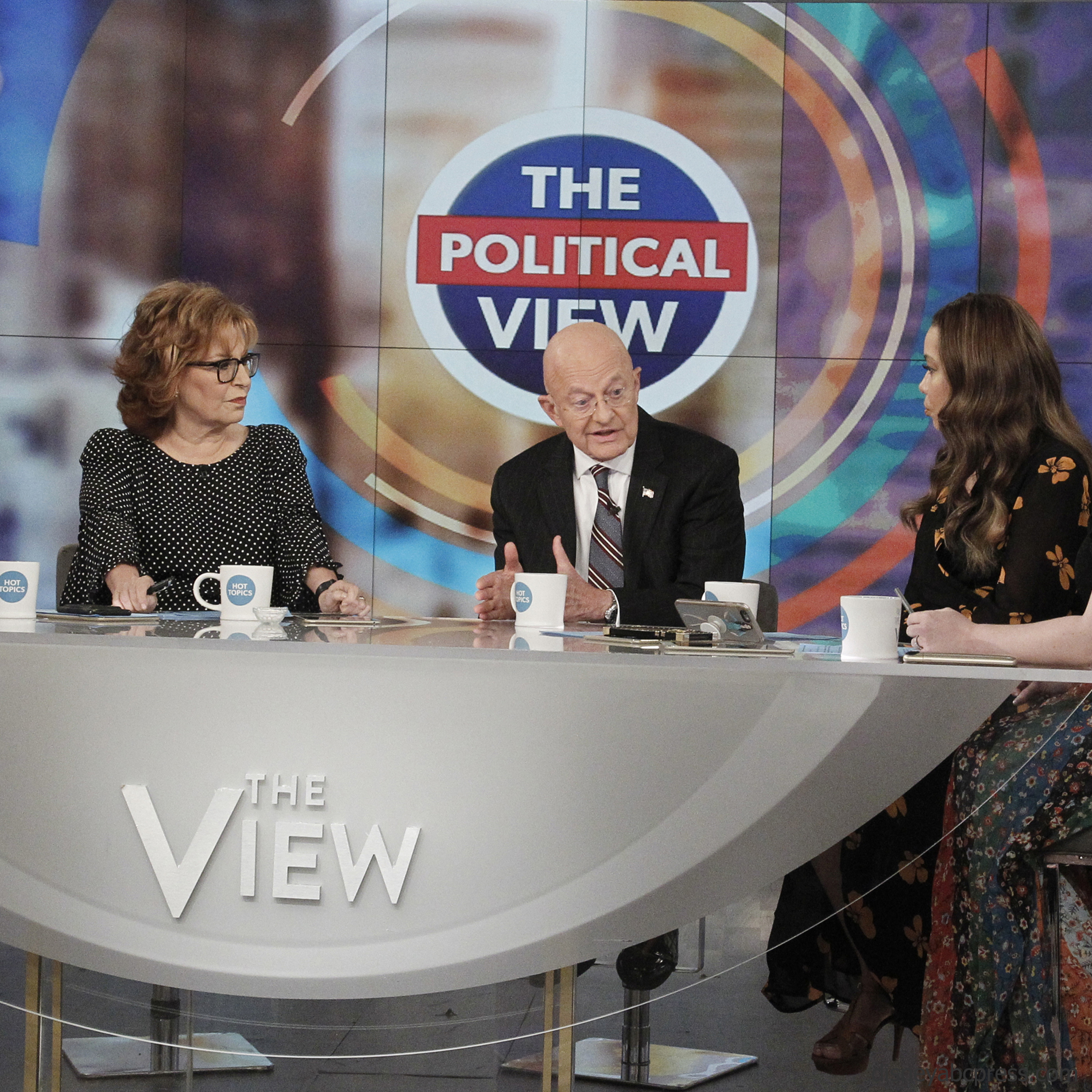
I had a surprising moment last week. While scrolling through the fetid swamps of social media, I happened across video of James Clapper, Director of National Intelligence for former President Barack Obama, trying his best to keep his head above water on the daytime chat show The View. Just watching the poor bastard trying to explain the intricacies of presidential politics and intel gathering to a token conservative and a bunch of girls who could get outwitted by a doorknob would have been sad enough. Watching him try to explain the latest version of the deep state's excuse for spying on an active presidential campaign to a blowhole like Joy Behar was worse. Watching him get so flustered trying to get a word in edgewise, while Behar yammered like an air-raid siren, that he accidentally admitted that yes, the Obama Administration did spy on the Trump campaign; well that kinda got me in the feels. For just a moment, I actually felt bad for the guy.

But then I got over it. For openers, nobody forced him to climb into that hen house. Anyone as dialed in as Clapper should know, you climb in the hen house, you're gonna get chickensh*t on you. As Clapper — oopsie — acknowledged, he and his fellow Obama minions and deep state spooks did exactly what Trump said they did. So stuff the sympathy for Jimmy C., he's the villain of this saga.


Clapper's not alone, he just happened to draw the short straw when they decided who'd have to take the latest excuse to the soft-headed Sallys on the coffee talk circuit. The "Spygate" trail of slime runs from Clapper to FBI lovebirds Peter Strzok and Lisa Page, to disgraced ex-FBI Director James Comey, to former Attorney General Loretta Lynch, to special counsel Robert Mueller, to the Big "O" himself. It also makes stops at nearly every major media outlet and the social media feeds of nearly every left wing kook in a "pussy" hat.

To be fair to Clapper, it can't be easy keeping the story straight. Clapper's admission to spying represents, by my count — and I'm probably being creative with the math — ninth different version of the tale. The investigation started because the Hillary Clinton campaign-funded, now discredited, "Steele Dossier" raised the alarm. No, it was because Carter Page went to the Bolshoi. No, it was because George Papadapoulos get soused with the Australian ambassador. No, it was because Paul Manafort did a deal in Kiev. And there was no spying. OK, there was spying, but it wasn't spying, it was "covert human source." They didn't do it. They did it, but they did to protect Trump. They did it to protect Trump, but they didn't think potential Russian subterfuge was worth reporting to Trump.

No wonder Clapper stepped on a rake on The View. These guys put together an active intelligence operation, complete with double agents and clandestine meetings in Eastern Bloc cities. It involved a veritable cast of dozens, if not hundreds, of participants. But the "inside man" didn't overhear a sinister conversation. The other surveillance never caught Trump canoodling with a dusky femme fatale with a Winter Olympics-y accent. They made it all up and then used it as an excuse to engage in the kind of behavior that ultimately cost Richard Nixon the presidency. And then they proceeded to fumble the ball and kick it around the field for over two years.

So don't waste your sympathies on guys like James Clapper. He played a willing part in an actual conspiracy that threatened the very foundations of our Republic; all in a failed attempt to give Hillary Clinton the big chair in the White House. By the end of the week, Clapper was telling anyone who would listen that the Russians not only interfered with the election, they swung it to Trump, citing a mysterious 80,000 votes. That assertion put him at odds not only with himself, contradicting his prior testimony to Congress, it put it him at odds with his old boss, Obama, who proclaimed "There is no serious person out there who would suggest somehow that you could even rig America's elections." These guys built a maze of bull crap and painted themselves into the middle of it. And they retreated to parsing words like Bill Clinton getting caught with an intern and a cigar. Over two years of this nonsense, and they're still trying to pound square peg like Hillary into the Oval Office. Just because they can't get over it doesn't mean I can't.

—Ben Crystal 

Monday, June 18, 2018

A Secret Payment Is The Bombshell Proof Obama Is Guilty In The Worst Scandal Ever


A Secret Payment Is The Bombshell Proof Obama Is Guilty In The Worst Scandal Ever

From Great American Daily

Sunday, June 17, 2018

Illinois lawmakers eye pushing back pension delinquency law


After Harvey, Illinois lawmakers eye pushing back pension delinquency law

Some lawmakers are looking to roll back enforcement of a 2011 pension delinquency law to help other Illinois towns avoid the police and firefighter layoffs seen in cities such as Harvey.
State Sen. Napoleon Harris’ hometown of Harvey was the first city to have its tax money collected by the state withheld because the city was shirking pension payments to police and firefighters. Since a court ruling earlier this year, the state comptroller’s office has withheld more than $1.8 million in tax revenues from Harvey, forcing the city to lay off firefighters and police officers. Harvey underpaid its police and fire pensions by $2.9 million in 2016.
Harris said his bill would push those tax revenue collections back to 2020 and place exceptions for distressed communities like Harvey.
“There’s going to be many other municipalities unable to pay these skyrocketing pension costs as well as continue to [provide] the public services that the citizens need and demand,” he said before the Licensed Activities and Pensions Committee approved amendments to his bill.
Analysts at Wirepoints, a government watchdog group, have said more than 200 municipalities across the state risk similar tax withholdings to pay pensions. Danville, East St. Louis, and Kankakee are in the worst shape with delinquent payments. Danville recently created a fee that would go directly to pay pensions. Kankakee raised taxes.
Both Republicans and Democrats questioned why there was no oversight of delinquent cities like Harvey, but the committee sent Harris' bill to the Senate floor for consideration.
“We’re gonna see in the paper that the state waives the amounts due and then they’re going to read that the aldermen there are getting paid $100,000 a year,” southern Illinois Democrat Bill Haine, D-Alton, said. He still voted for the bill.
The city of Harvey allocated $240,000 in wages for six aldermen in fiscal year 2017, the most recent budgetpublished. That doesn’t account for pension contributions and other “fringe benefits” that the budget lists.“The bill kicks the can down the road,” said attorney Michael Moirano, who represents the Harvey Police Pension fund. “We cannot continue to do that and hope to resolve these pension issues."
He said negotiations are underway to reach an agreement with the city of Harvey, but added: “the bill will make a mutually agreeable resolution impossible.”
The delinquency is certified and executed by Illinois Comptroller Susana Mendoza’s office. Officials from Mendoza’s office said they are following the law.
“The Comptroller’s Office does not want to see any Harvey employees harmed or any Harvey residents put at risk,” spokesman Abdon Pallasch said, “but the law does not give the Comptroller discretion in this case.”