| China Kills Solar | ||
| ||
I will admit at the outset: I am confused by China's sudden about-face on solar energy installations. China has been the global leader in adding solar energy capacity for years.
![]()
In 2017, it added 53 gigawatts of solar power generation capacity. It takes around 4.5 million solar panels to produce a gigawatt of power.
That was half of what the entire world added last year, and it brought China's total capacity to 130 gigawatts. 130 gigawatts is enough to power approximately 4.3 million U.S. homes.
Given that the average U.S. home uses something like 10 times the amount of electricity that an average Chinese home does, China has enough solar to power 43 million homes for a day. (China also has close to 200 gigawatts of wind power, good for 4% of total electricity capacity.)
China has been trying to reach a goal of 20% renewable power by 2030. And it makes sense because China has serious air pollution problems. Plus, it doesn't have natural gas like the U.S. does.
China's commitment to solar energy has made Chinese companies the biggest solar panel makers in the world, companies like ReneSola, Trina Solar, JinkoSolar, and China Solar. Combined, they exported nearly 40% of the world's panels last year.
So why would China suddenly attack its own solar industry?So China Hates Solar Now?
The South China Morning Post ran this on Friday:
A joint statement put out on Friday by the National Development and Reform Commission, Ministry of Finance and National Energy Administration said the allocation of quotas for new projects had been halted until further notice, and tariffs on electricity generated from clean energy will be lowered by…
The official reason for cutting subsidies is:
I'm not going to knock subsidies. We subsidize stuff all the time here in the U.S. I'm not going to criticize the abruptness of China's actions, either. At some point, solar companies have to be able to survive without the handouts.
Still, it's curious. Because from what I've read, China has already met its "allocation of quotas for new projects." So it's basically done for the rest of the year.
I came across a couple interesting theories about all this. Here's a best-case scenario:
The decision may be rooted in actions of the Trump Administration. Earlier this year, President Trump announced a 30% tariff on imported solar equipment that would last at least the next four years. The decision was a response to a couple of U.S. solar companies charging that China's solar subsidies…
Now, here's (perhaps) a more realistic outcome from Bank of America analysts:
China's decision to rein on its local solar industry poses the risk of an oversupplied Chinese solar market flooding the U.S. market, Dumoulin-Smith said in the downgrade note. This will naturally create "significant competition" in the U.S. market and result in price declines and margin declines fo…
Chinese solar companies likely have a lot of unsold panels lying around. The costs are sunk; companies may be in a position to take whatever they can get for their panels.
Blood in the Streets?
Solar stocks have been just crushed on this news, down over 20% across the board. Any time there's blood in the streets, you gotta think opportunity. So is there opportunity here?
Clearly the first place to look is the best solar company in the world, First Solar (NASDAQ: FSLR). I affectionately refer to FSLR as "fizzler." But it's not so funny now that we've watched the 50% gain on the stock in The Wealth Advisory shrivel down to 8%.
The risk is that the U.S. follows suit on removing subsidies sooner than the market expects. We all know subsidies will end at some point. It's just a question of when.
A couple days ago, First Solar was a $7 billion company. Today, it's $5.6 billion and falling. But the company has $2.5 billion net cash and does ~$3 billion in annual revenue. So, not only is First Solar a survivor, but it may well thrive in this environment. It only gets 10% of its revenue from China. So that's a non-issue...
And if Chinese companies do try to dump panels in the U.S., I bet they get slapped with another round of tariffs and actually lose footing in the U.S. market.
The stock is trading just above $53 today. Bank of America has a $63 target, down from $80 or so. Morgan Stanley dropped its target to $47 from $83.
Either way, the stock is likely close to a buy point after investors have been furiously revaluing the company.
|
Showing posts with label @sbalich @. Show all posts
Friday, June 29, 2018
China Kills Solar
Saturday, June 9, 2018
Manipulation and coercion
By Bob Livingston
It is often said that "other-izing" people overall can be dangerous and other-izing your enemies specifically can be tactically detrimental. For one, it can lead to a false sense of superiority over those people as you assert some kind of imagined genetic advantage. It can also lead to dangerous generalizations of vast groups as you categorize and pigeonhole millions as being exactly the same when this is rationally impossible. However, other-izing is perhaps the only option when faced with a very particular type of person embracing a very particular brand of ideology; other-izing can become a matter of survival.
I am of course talking about globalists. Not the low level cronies and useful idiots within the globalist push or "movement," because many of them simply represent a underlying gullibility or stupidity among people attracted to the inbred world of academia. I'm talking about the people behind the curtain, self proclaimed "globalists" or internationalists that have positioned themselves into strategic power centers. I am talking about the people that influence or outright control government policy as they stand over the shoulders of supposedly freely elected officials. I am talking about the people that influence economic security or insecurity through unaccountable central banking conglomerates. I am talking about the men and women that desire to dictate the fate of billions.
These people are not easily identified by anything other than their rhetoric and actions. They are made up of multiple ethnic groups. They herald from all corners of the planet. They do not subscribe to any one spiritual doctrine, but they do publicly devote themselves to many different religions as a means to "fit in" with the common citizen. Globalism is their religion. And their god? Well, they see themselves as gods.
To be a globalist, it seems as though one has to do more than merely subscribe to the tenets of globalism; there is a matter of character traits which must be examined.
After studying the behavior of globalists and their organizations for quite some time, I have noticed that their psychological patterns tend to match with a narrow band of people that are best described as "criminally insane." More accurately, globalists behave like high-functioning narcissistic sociopaths and psychopaths. But what are the traits of such people? Let's take a look at some of them...
False sense of superiority – self-aggrandizement
Every person wants to be seen as important or unique. But, narcissistic sociopaths believe themselves to be entitled to special treatment and see themselves as above the laws and niceties of normal society. They sometimes seek to prop up this attitude through "accomplishment;" scratching for positions of power and influence in order to reinforce the notion that they are special compared to others.
Of course, power is usually an artificial construct because the only power we have over others is the power they give us, knowingly or unknowingly. Power does not make one special. The narcissistic sociopath does not make such distinctions. He/she only distinguishes between the people who strive for dominance and everyone else. People that covet power are a superior subspecies, while people who do not covet power are considered bugs.
Frankly, I see no reason why we should not make the same distinction, only in reverse.
Narcissistic sociopaths and psychopaths are stricken with visions of assumed greatness. They do not view the content of their accomplishments as necessarily important. Meaning, they were born great, therefore, it is not for them to accomplish anything that serves to help others or advance the knowledge of humanity. They don't care about proving their greatness. They only care that people believe that they are special, that they are anointed.
Manipulation and coercion
A narcissistic sociopath usually prefers to get what they want easily. They want people to hand them adoration and control automatically. But if they don't get what they want as a matter of course, they will use any means at their disposal.
This usually includes the threat of force or the use of force, the use of torture, the use of elaborate lies and schemes to push their target into a corner (to make them behave in a specific manner), the use of psychological conditioning (molding behavior, usually through fear responses) and also the use of "gaslighting" (accusing the target of being "crazy" if they do not subscribe to the narcissist's twisted view of the world).
Of course, this kind of disturbed person is never actually satisfied, even when they do get what they want. They always want more, there is always something else they need to fill the endless void within.
Lack of empathy for others
Not all narcissists are sociopaths, but most sociopaths are narcissists. When we speak of narcissists, it is important to remember that there are varying degrees of this psychological malfunction. When I mention globalists in particular as being "narcissistic," I am referring to their propensity to be high functioning narcissists with sociopathic tendencies. In other words, they are narcissists that not only have an inflated sense of self worth, but they are also devoid of empathy and conscience. They are willing to harm others to any degree to get what they want in the moment as long as they think can avoid consequences for doing so.
There is also the matter of distinction between sociopaths and psychopaths. This is a little hard to describe being that they are so similar in many respects. I would put it this way — while sociopaths chase a goal and are willing to step on people to get to it, psychopaths step on people even when they don't have a goal in mind. That is to say, the psychopath enjoys the act of destruction itself.
Sociopaths and psychopaths both appear to permeate the ranks of globalist institutions. Some of them want to build an idol to themselves and don't care who they harm in the process. Some of them derive great enjoyment from simply hurting as many people as possible.
Desperate need for adoration
It is not enough for the narcissistic sociopath to attain a level of respect through coercion. Ultimately, what they want is for the lowly masses to voluntarily accept their greatness as absolute, as an obvious and undeniable fact of life. What they want is reverence and devotion. As mentioned earlier, they want to be treated as gods by the people around them, and if they are particularly ambitious, by everyone in the world.
This is a strange dynamic indeed, for it requires a highly elaborate set of schemes and manipulations. If one is not a great person, let alone god-like, the amount of psychological conditioning needed to convince people otherwise is substantial. This makes the narcissistic sociopath a potential slave to his/her own incessantly engineered conspiracies; lies pile upon lies and schemes upon schemes in the search for something they will never truly achieve.
Globalists are psychologically broken non-humans
In the world of alternative analysis and investigative journalism it is not uncommon to run into people who attribute an otherworldly status to globalists. Some people see them as a representation of biblical evil — minions from the depths of hell. Others see them as literally alien — interdimensional beings posing as human. And while many will laugh at such people as fringe conspiracy freaks, I think it is important to understand why they see the globalists this way.
Globalists exhibit most if not all the telltale signs of narcissistic sociopaths, including being devoid of conscience and moral compass. While there are many definitions of what it is that makes us human, there is a kind of universal requirement regardless of culture; namely the requirement of something like a soul. What makes a soul? Well, a basic desire to do right by others even if that means not getting what we want all the time is a good starting point, but there is more to it than that.
Psychologists and scientists have over many decades found a pattern of inherent character traits, traits present in human beings from the moment of birth outside of the influences of social environment. Carl Jung was the foremost expert in this field of "archetypal qualities," with a vast catalog of case studies from around the world including studies in tribal Africa. An important part of archetypal or inborn knowledge and traits is the notion of good and evil; we are born understanding that certain behaviors are constructive while others are destructive and abhorrent. This is most likely the source of what we call "conscience."
Unfortunately, not all people are born with conscience. In some people, the difference between good and evil or constructive and destructive behavior is blurry or non-existent. Jung and other psychologists mark this subset of our society as "latent" sociopaths and psychopaths. Together they make up around 10 percent of any given culture or group. Many of them remain "latent" for their entire lives unless certain unstable environmental conditions provide fuel for their illness. Around 1 percent are born as full blown sociopaths and psychopaths. These are what I would call the "non-humans."
This is because high level narcissism and sociopathy are not traditional "mental illnesses," but ingrained character traits. A narcissistic sociopath cannot be "cured" of his ailment because it is not an ailment, it is who they are. If you were to take the narcissism and sociopathy away from them, there would be nothing left.
When a normal person comes in contact with someone that has no inherent conscience there is an immediate recoil; a sense that they have just stumbled across a monster. This is not an exaggeration, this is entirely accurate.
High level narcissists and sociopaths are physically human of course, but if we were to peer in at a visual representation of their psyche, we would find a barren wasteland — a place where ghouls lurk. They do not dream as normal people dream. They do not feel joy in the manner normal people do. They do not feel fulfillment in the things that commonly lift up the rest of us. They are incapable of love for others. They are incapable of regret beyond their own failures to get what they want. They do not see other people as individuals, they see them as tools to be exploited.
Being sociopathic though does not mean that they are ignorant of what makes the rest of us function. On the contrary, sociopaths are very good at identifying the personal desires and drives of others, and mimicking people in a way that makes them seem "human." They are parasites by nature,and thus they have to be able to get close to their host victims if they are to survive.
The globalist dynamic is interesting in that it is an example of organized narcissistic sociopathy. Contrary to popular belief, sociopaths and psychopaths do work together towards a common goal as long as there is a sense of mutual benefit. In fact, these people seem to gravitate to each other in odd ways. I believe that globalist hierarchies actually seek out people with narcissism and sociopathy deliberately when they expand their ranks. These seem to be the only aspects of their membership that are common.
It is quite a "conspiracy theory," I know. But look at it this way, how else can we explain their tendencies and behaviors? If organized annihilation was an intrinsic value of humanity then we would have died out long ago. The globalists are not human, though. They are something opposite, and if you do not understand the root of what motivates them, they can be bewildering and terrifying.
|
Thursday, April 5, 2018
Congress says THIS time we really mean it!
Posted by Michael Shannon

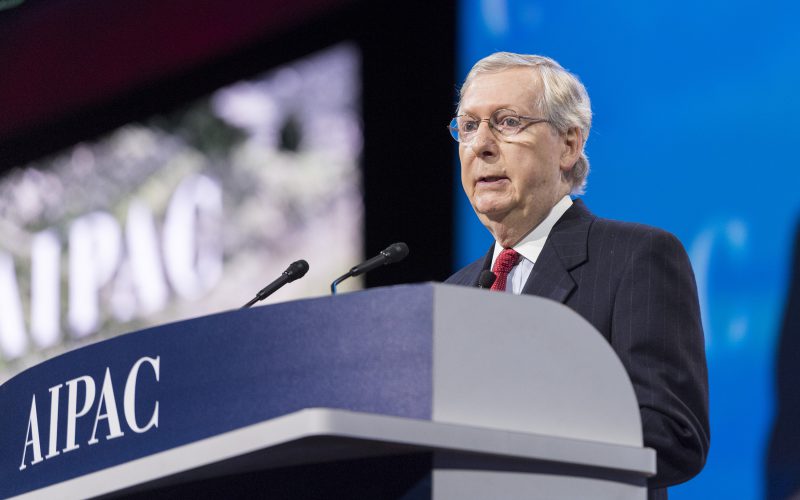
There’s a bill being lovingly preserved by Mitch McConnell, Curator of the Senate, that’s one of those “bipartisan” efforts the media loves to celebrate.
Senators John Cornyn, (R-Texas), and Chris Murphy, (D-Connecticut), have introduced legislation I’m sure they’ll be featuring in future campaign commercials. According to CNN, the bill “aims to strengthen how state and federal governments report offenses that could prohibit people from buying a gun.”
Specifically, “It would ensure that federal and state authorities comply with existing law and require them to report criminal history records to the NICS.”
Strangely enough, we already have a law, passed by Congress, that requires just that. Yet no one ever asks what makes the esteemed senators believe the federal bureaucracy will follow this new law when they are failing to obey the old law?
Or why the legislative branch allows the bureaucracy to get away with ignoring the law without consequence in the first place?
Nothing demonstrates the impotency of the GOP congressional leadership like introducing a new, stringent law when these political eunuchs can’t seem to convince the bureaucracy to adhere to law already on the books.
Federal statutes require criminal history be reported to the NICS in a timely fashion now. It’s vitally important a potential gun purchaser’s records be current when the dealer runs a background check.
Why don’t these overpaid “leaders” who assure us they are “fighting for you” force the bloated, unresponsive, inert federal government to be accountable to current law? Why are they so comfortable with being ignored by the government they assure us they are leading? Is it because most of these barnacles have been in office so long they think of themselves as government employees?
Or is it fear of angering the federal workforce? If that’s it, I’ve got news for Republicans: Swamp bureaucrats already vote Democrat in overwhelming numbers. Virginia’s 2017 state election is all the proof one requires.
A smart political solution would be to take the side of the taxpayer and demand current law be obeyed.
Cornyn and Murphy’s bill is a hand-wringing response to the Air Force’s failure to prevent the Sutherland Springs church shooter from buying a weapon. The shooter had been convicted by the USAF of domestic abuse, child abuse and had been dishonorably discharged. If any one of those three records had been entered into NICS, he would have failed the background check and would’ve been prevented from buying a rifle.
Because of Air Force negligence 26 people are dead and absolutely NOTHING happened in response. I suppose taxpayers shouldn’t be surprised. Since no one lost their job after 9/11, how can we expect repercussions for the relative handful of dead in Texas?
A Senate or House that was truly interested in establishing a climate of responsibility and accountability in the federal government would have come down on the USAF like the Wrath of God.
Could the Senate have done something? Certainly, but it requires work. For starters, the committees dealing with the services could have begun an investigation and held hearings. And I don’t mean a hearing where the Secretary of the Air Force and his entourage enters the room and delivers suitably contrite and take-no-specific-responsibility sound bites.
I mean a hearing where the entire chain of command at the base where the paperwork failure occurred is subpoenaed, sworn in and grilled in televised hearings. I want the incompetent clerk, the supervisor and all the rest of the base chain of command on the stand being interrogated. And when base personnel are rung out, we can move up to those in the Pentagon who are responsible for records.
Only afterwards does the Secretary of the Air Force make his appearance.
In addition, committee investigators must refuse to accept “we can’t answer personnel questions due to privacy” dodge. That shuffle is beloved by bureaucrats because it allows them to escape scrutiny and accountability. If these people are in ‘public service’ then what they do is public, too.
Settling for the “privacy” excuse denies the public accountability in two ways. They never learn the identity of the miscreant or what the consequences, if any, were. Plus, “privacy” is also a cover-up for the supervisor, because we never learn if he lifted so much as a finger to fire or punish the guilty.
I want the full weight of public shame and notoriety to be hung around the all the aider’s and abettor’s necks. As far as I’m concerned if an employee values his privacy, he can work in the private sector.
Passing more laws to require adherence to previous laws is ridiculous on its face. As is a Congress that believes it’s doing its job by passing laws and then assuming the role of a bystander.
— Michael Shannon
Monday, March 5, 2018
Expert doesn’t expect Illinois public sector health insurance costs to change until there’s near fiscal catastrophe

Highland Park Hospital in Highland Park, Illinois
Photo courtesy of the NorthShore University HealthSystem
The amount of a state employee's health care that is paid for by taxpayers is notably higher in Illinois than the national average, and one health insurance expert warns it may take the state practically going bankrupt before there’s real change to bring taxpayers' cost down.
Gov. Bruce Rauner said last week during his budget address the state has to change how it manages group health expenses for state employees. If not, he said the state’s finances will continue to deteriorate.
“Today, we pay almost 90 percent of the premiums for government employee health insurance policies that are way more expensive than plans in the private sector,” Rauner said. “Taxpayers shouldn't have to pay for government health insurance policies that are richer than the ones they can afford for themselves. That’s not fair.”
Rauner wants to bring that down to a 60/40 split, something he said could save taxpayers $470 million.
Northbrook-based Castle Group Health President Mark Gurda doesn’t expect that to happen. He said Rauner’s proposal could just be a bargaining chip.
“While I’m all for the state getting their budget in order, I’m not sure that this isn’t a negotiating position to get to 70 or 75 [percent],” Gurda said.
The Kaiser Family Foundation put the national average health insurance split at about 70/30 in 2017.
Rauner’s plan would not just try to address the taxpayer cost of state employee healthcare to find $470 million in savings, he also wants to shift the cost of university employees health insurance to the schools for savings of $105 million. He also wants to end health subsidies provided to retired teachers and community college employees for $129 million in taxpayer savings.
Gurda doesn’t expect Rauner to get what he wants. He doesn’t expect the status quo to change at all until a near fiscal catastrophe.
“Then and only then, when there are consequences of no action, will there be something proactive,” Gurda said.
As of the end of the 2017 calendar year, there was a backlog of the taxpayers’ portion of state employee health insurance of more than $1.4 billion, according to the Illinois Commission on Government Forecasting and Accountability. The late interest penalties on that are nearly $430 million.
The backlog is down from $5.1 billion in September of last year, but only because the state went more than $6 billion in debt with bonds to pay down backlogged bills. Nearly $4 billion of that was for the backlogged health bills.
COGFA says the state has a chronic problem of not properly funding state employees', retired teachers', community college employees' or local government officials' health plans.
COGFA pinned the underfunding on a combination of medical cost inflation, insufficient appropriations, and rising interest payments. The two avenues for solutions, COGFA said, are reducing spending and/or increasing revenues, which includes increasing contributions from public sector employees or finding extra money elsewhere in the budget.
Subscribe to:
Posts (Atom)